
Les termes voyance intuitive, tarot et guidance sont souvent employés comme s’ils désignaient une seule et même pratique. Pourtant, ces approches reposent sur des mécanismes, des outils et des intentions bien distincts.
Derrière ces mots se trouvent en réalité des manières différentes d’explorer une situation, de capter des informations et d’accompagner une personne dans ses questionnements. La voyance intuitive fait appel aux ressentis directs et aux perceptions extrasensorielles, le tarot s’appuie sur un support symbolique riche en archétypes, tandis que la guidance se situe davantage dans une démarche d’éclairage et d’accompagnement personnel. Pourtant, ils ne recouvrent pas exactement la même réalité.
Comprendre leurs différences permet de mieux savoir ce que l’on vient chercher lors d’une consultation et surtout, ce que l’on peut en attendre.
La voyance intuitive : percevoir les dynamiques invisibles

La voyance intuitive repose avant tout sur la perception fine et directe. Elle s’apparente à une lecture sensible des dynamiques en présence : ce qui se joue en profondeur dans une situation, les mouvements en cours, les tensions sous-jacentes, ainsi que les influences parfois implicites ou non exprimées.
Contrairement à d’autres approches, elle ne nécessite pas forcément de support. Elle mobilise avant tout la capacité du praticien à capter des informations au-delà du visible et du verbal, en s’appuyant sur ses ressentis, ses impressions et sa connexion intuitive. Cette forme de perception permet d’accéder à une compréhension globale, souvent immédiate, de ce qui est en train de se vivre.
La voyance intuitive se révèle particulièrement pertinente lorsque :
- une situation paraît confuse ou difficile à cerner
- vous ressentez un décalage sans parvenir à en identifier l’origine
- vous traversez une période de transition ou de changement
- vous êtes face à une incertitude ou à un choix important
- vous ressentez le besoin d’un éclairage global plutôt que d’une réponse précise
Elle offre ainsi une lecture d’ensemble, en amont de toute analyse structurée. Plus qu’une réponse figée, elle propose une mise en lumière des enjeux présents, permettant de mieux comprendre ce qui se joue et d’aborder la suite avec davantage de clarté.
Le tarot : structurer et analyser une situation
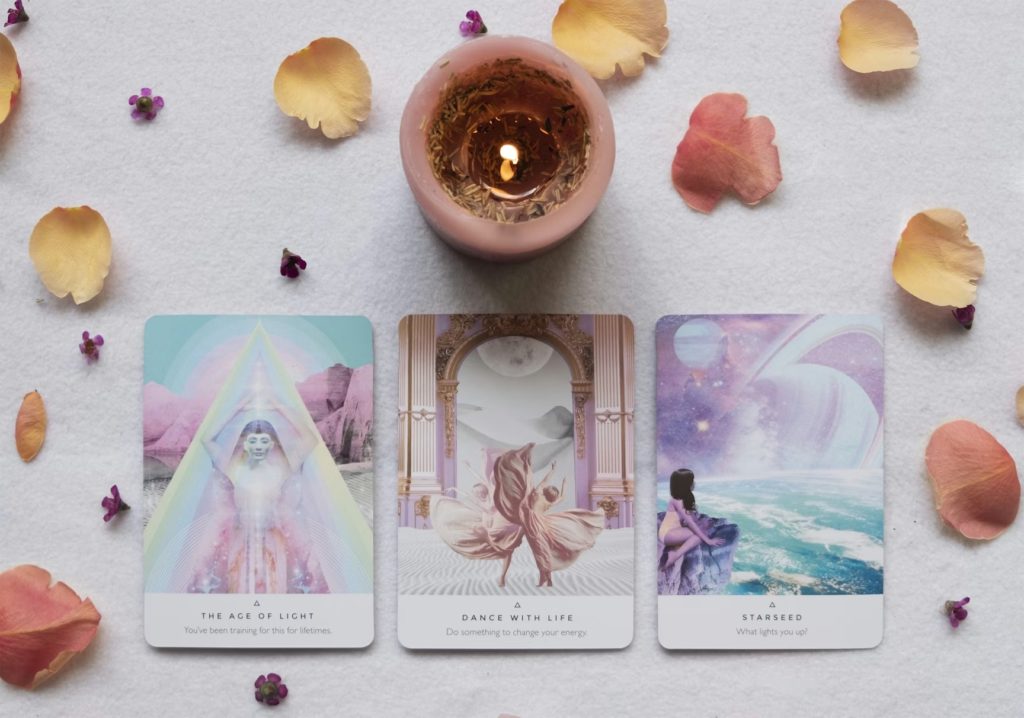
Le tarot est avant tout un outil de lecture et d’interprétation. Contrairement à une idée largement répandue, il ne consiste pas à prédire un avenir figé ou immuable. Il agit plutôt comme un miroir symbolique, mettant en lumière les mécanismes à l’œuvre, les interactions en jeu et les tendances qui se dessinent dans une situation donnée. Les cartes deviennent alors un support structuré, permettant d’analyser avec recul et cohérence ce qui est vécu.
À travers ses archétypes et ses symboles, le tarot offre une grille de lecture qui aide à décoder une réalité parfois complexe ou embrouillée. Il ne donne pas des réponses toutes faites, mais ouvre des pistes de compréhension et invite à une réflexion plus approfondie.
Le tarot permet notamment :
de clarifier les enjeux liés à une décision
d’identifier les forces en présence ainsi que les résistances éventuelles
d’explorer différentes options ou directions possibles
d’anticiper les conséquences potentielles d’un choix
Là où la voyance intuitive capte de manière directe et globale, le tarot vient structurer cette perception. Il apporte un cadre, une lisibilité, une mise en perspective qui permettent d’organiser les informations et de mieux appréhender les différentes dimensions d’une situation.
La guidance : accompagner et orienter

La guidance ne relève ni de la prédiction, ni d’une simple analyse ponctuelle. Elle s’inscrit dans une démarche d’accompagnement, dans le temps et dans la profondeur. Son objectif n’est pas seulement de comprendre une situation, mais d’aider à intégrer les éléments révélés, que ce soit par la voyance intuitive ou le tarot, afin de poser des choix plus alignés et plus conscients.
Elle invite à un repositionnement intérieur : prendre du recul, clarifier ses intentions, retrouver sa capacité à décider sans se laisser uniquement guider par les doutes ou les réactions émotionnelles. Là où la perception éclaire et où l’analyse structure, la guidance accompagne le passage à l’action.
La guidance permet notamment :
de prendre du recul face à une situation complexe
d’aborder une décision importante avec plus de clarté
de garder un cap dans la durée, même en période de doute
d’éviter de se laisser submerger par l’émotion ou la peur
Elle devient particulièrement précieuse lorsque le besoin dépasse le simple éclairage ponctuel. Elle offre une forme de continuité, un soutien dans le cheminement, permettant d’avancer avec plus de stabilité, de discernement et de confiance dans ses propres choix.
Trois approches, une même intention
Dans la pratique, ces trois dimensions ne s’opposent pas : elles se répondent et s’enrichissent mutuellement. Loin d’être cloisonnées, elles forment un ensemble cohérent, où chaque approche apporte une clé de compréhension complémentaire.
La voyance intuitive ouvre la perception. Elle capte les dynamiques en présence, met en lumière ce qui se joue en profondeur et offre une première lecture globale de la situation.
Le tarot, lui, vient structurer cette matière. Il organise les informations, met en perspective les éléments perçus et apporte une lecture plus précise, plus lisible, des enjeux et des possibles.
La guidance, enfin, permet d’intégrer ces éclairages. Elle accompagne dans la prise de décision, aide à transformer la compréhension en action et soutient le cheminement dans la durée.
Ensemble, ces trois approches offrent une lecture à la fois sensible, structurée et orientée vers l’action. Elles permettent non seulement de mieux comprendre une situation, mais aussi d’avancer avec plus de clarté, de cohérence et de justesse.
Ce que ces pratiques ne sont pas
Il est essentiel de préciser ce que ces pratiques ne sont pas, afin d’éviter toute confusion ou attente irréaliste.
- Elles ne remplacent pas un avis médical, psychologique ou juridique.
- Elles ne décident pas à votre place.
- Elles ne figent pas un destin.
Leur rôle est ailleurs. Elles proposent un éclairage, une lecture, une mise en perspective. Elles permettent de mieux comprendre une situation, d’identifier des dynamiques, d’ouvrir des pistes de réflexion, mais elles ne retirent jamais votre responsabilité personnelle.
Car, en définitive, vous restez toujours au centre de vos choix. Votre libre arbitre demeure essentiel, et c’est à travers vos décisions, vos actions et votre évolution que les lignes bougent. Ces pratiques n’imposent rien : elles accompagnent, elles éclairent, mais le chemin vous appartient.
Pourquoi faire la différence ?
Savoir distinguer ces approches permet d’aborder une consultation avec des attentes plus justes et plus réalistes. Il ne s’agit pas de venir chercher une vérité imposée, ni une solution toute faite qui viendrait résoudre instantanément une situation.
Ce que vous venez réellement chercher, c’est de la clarté, de la compréhension et un autre regard sur ce que vous traversez. Un espace pour prendre du recul, pour voir les choses autrement, et pour remettre du sens là où tout peut parfois sembler confus.
C’est précisément dans cette nuance que réside toute la valeur de ces pratiques : non pas dans des réponses figées, mais dans la capacité à éclairer, à ouvrir des perspectives et à vous permettre d’avancer avec plus de conscience et de discernement.

Si vous traversez une période d’incertitude ou un moment de décision, ces trois approches peuvent vous aider à poser un regard plus lucide sur ce que vous vivez. La clarté ne supprime pas les choix à faire. Elle permet simplement de les aborder avec plus de conscience. Réserver une séance peut être le premier pas pour aborder vos décisions avec plus de clarté et de discernement.
Quelle approche choisir entre voyance intuitive, tarot et guidance ?
Lors d’une consultation, ces trois approches peuvent être utilisées ensemble. La voyance intuitive permet de percevoir les dynamiques en cours, le tarot structure l’analyse et la guidance accompagne la prise de décision.
La voyance ou le tarot peuvent-ils prédire précisément l’avenir ?
Non. Ils mettent en lumière des tendances et des mécanismes, mais les décisions et leurs évolutions restent toujours entre vos mains.
Quand consulter : au début d’un doute ou après avoir déjà réfléchi ?
Il n’y a pas de règle. Certaines personnes consultent dès les premiers questionnements, d’autres après avoir longuement réfléchi. L’important est de ressentir le besoin d’un éclairage extérieur et de s’écouter.